
The Hidden Threat: Understanding Mold and Your California Home Insurance
Imagine this: You wake up one morning, grab a coffee, and notice a faint, musty smell. Maybe it’s coming from under the sink, or a corner of the bathroom you rarely use. You don’t think much of it at first. Then, a few days later, you see it – a dark, fuzzy patch, spreading quietly. Mold.
For most California homeowners, that sight isn’t just disgusting; it’s a punch to the gut. It’s a health concern, sure. But it’s also a giant, flashing red light for your finances, especially when you start thinking about your home insurance. You’ve been paying premiums for years, expecting coverage when things go wrong. But mold? That’s where things get really murky.
Mold is insidious. It thrives in silence, often behind walls or under floors, fed by even the smallest water leak. By the time you see it, the damage can be extensive. And getting rid of it isn’t just a simple scrub-down. Proper mold remediation involves specialized equipment, containment, and often tearing out affected materials. That can run into tens of thousands of dollars, easily.
Here’s where it gets interesting. Most folks assume their home insurance will just “take care of it.” The short answer is yes. The real answer is more complicated.
Why Mold Coverage in California Feels Like a Maze
Think back to the early 2000s. There was a rash of massive mold claims across the country, some hitting millions of dollars. Insurers got spooked. Big time. They started to tighten their belts, adding exclusions and strict limits specifically for mold damage.
California, with its unique insurance landscape – shaped by things like Proposition 103 and the constant threat of wildfires and earthquakes – saw these changes, too. Insurers here are already walking a tightrope, balancing risk with what they can reasonably charge. Mold just added another layer of complexity.
The biggest hurdle for homeowners? The distinction between “sudden and accidental” water damage and “gradual” damage. Your policy is designed to cover the former. A pipe bursts, flooding your kitchen – that’s sudden. A torrential downpour leads to a leak in your roof, soaking your attic – also sudden. Mold that sprouts directly from these events? Often covered.
But here’s the thing. What if that pipe had a slow drip for months, unnoticed, rotting the wood behind your wall and creating a perfect mold breeding ground? Or that roof leak was a tiny trickle that you just kept putting off fixing? That’s gradual damage. And that’s almost universally *not* covered. Insurers see that as a maintenance issue, something you, the homeowner, should have prevented. It’s a tough pill to swallow, but that’s the reality.

What Your Standard Homeowners Policy Probably Covers (and Doesn’t)
Most standard California homeowners policies *do* offer some level of mold coverage. But it’s almost never unlimited. It’s also nearly always tied to the *source* of the water damage that caused the mold.
Let’s be clear: Your policy won’t cover mold that simply appears because your bathroom is humid or because you left a wet towel on the floor for too long. That’s not what insurance is for. It’s there for unexpected events.
So, if a tree falls on your roof during a storm, tears a hole, and rain pours in, leading to mold? That’s likely covered. If your washing machine hose suddenly ruptures, flooding your laundry room and causing mold to grow in the drywall within days? Covered. The fire department douses a small kitchen fire, and the water leads to mold in the walls? Also covered. These are all “sudden and accidental” events.
But wait — what if your water heater has a tiny leak that’s been slowly seeping into the subfloor for six months? And then, BAM, you discover black mold everywhere? That’s a gradual leak. That’s probably *not* covered.
Which brings up something most people miss. Many policies include something called an “anti-concurrent causation” clause. This basically says that if a covered peril (like a burst pipe) and an excluded peril (like gradual water damage or neglect) both contribute to the damage, the exclusion often wins. It can be a real headache to sort out.
The Dreaded Mold Sub-limit
Even when mold *is* covered, you’ll almost certainly run into a “sub-limit.” This is a specific cap on how much your insurer will pay for mold remediation, even if the original water damage was a covered event.
How much? Often, it’s a shockingly low amount – maybe $5,000, $10,000, or sometimes $25,000. Sounds like a lot, right? Until you get a quote for mold remediation. Drying out a small area, removing contaminated materials, cleaning, and rebuilding can easily hit $15,000 to $30,000 for a medium-sized problem. For a larger issue, say, affecting a whole wall or part of your subfloor in the Valley or down in Ventura County, you could be looking at $50,000 or more.
Suddenly, that $10,000 sub-limit looks microscopic. You’d be on the hook for the vast majority of the repair costs yourself. Insurers set these sub-limits to manage their exposure to what can be very costly and often contentious claims. It’s a way for them to offer *some* coverage without opening the floodgates to potentially bankrupting payouts.
Taking Control: Steps to Protect Your Home and Your Wallet
Feeling a bit overwhelmed? You’re not alone. This is complicated stuff. But you can absolutely take steps to protect yourself.
Proactive Prevention is Your Best Defense
Honestly, the best “insurance” against mold is preventing it in the first place.
* **Be a detective:** Regularly check under sinks, around toilets, behind appliances, and in your attic for any signs of moisture or leaks. Even small water stains can be a warning.
* **Fix it *now*:** Don’t put off that dripping faucet or that slow-draining shower. Address any water issues immediately, even if they seem minor. A small leak today can be a huge mold problem next month.
* **Ventilate:** Use exhaust fans in bathrooms and kitchens. Good airflow helps dry out moisture before mold can take hold. This is especially important in humid coastal areas.
* **Control humidity:** If you live in an area with high humidity, consider a dehumidifier, especially in basements or poorly ventilated areas.
Reviewing Your Policy Details
You wouldn’t buy a car without checking the specs, right? Your insurance policy is far more important.
Don’t just assume you’re covered. Pull out your policy – or, better yet, call your agent – and ask specific questions:
* “What are my mold limits?”
* “What *causes* of mold are covered?”
* “Are there any specific mold exclusions I need to know about?”
* “Can I buy an endorsement for more mold coverage?”
Some insurers *do* offer endorsements to increase mold coverage limits, but they’re not always available, especially in California’s current challenging market. And if they are, they can be pricey. But it’s worth asking. Knowing your exact coverage, and its limitations, is power.
When Disaster Strikes: Filing a Mold Claim in California
Let’s say the worst happens: a sudden, covered event causes water damage, and mold starts to grow.
**Act fast.** This is non-negotiable. As soon as you discover water damage from a covered event, contact your insurer immediately. Don’t wait for mold to appear. Prevent it if you can. Get professionals in to dry out the area thoroughly. Document everything with photos and videos. Keep detailed records of all communication and expenses.
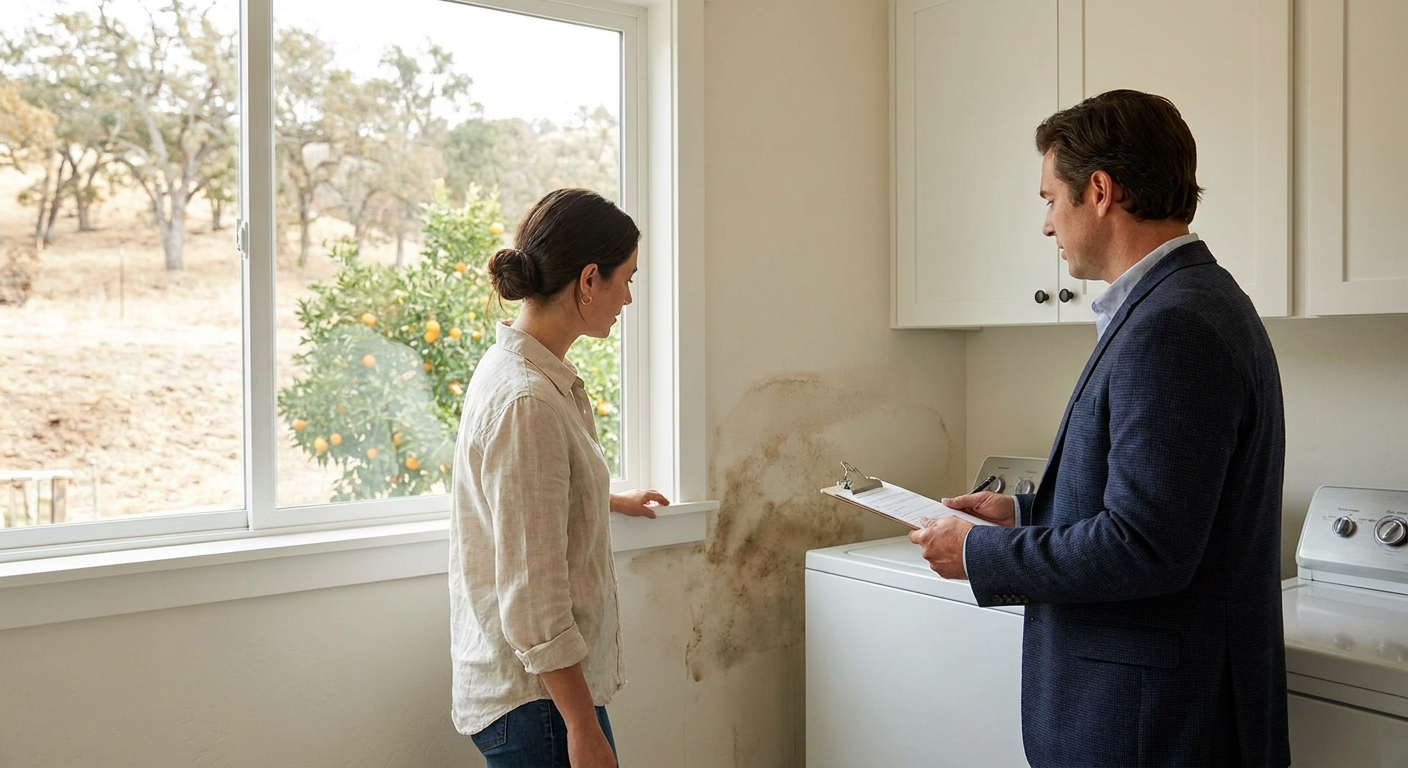
When you file a claim, be prepared for scrutiny. Your insurer will send an adjuster to investigate the cause of the water damage and the mold. They’ll want to determine if it was sudden or gradual. They might even bring in a mold specialist.
Sometimes, despite your best efforts, a claim might be denied. It’s frustrating. It feels unfair. But it happens. This is exactly why someone like Karl Susman at Los Angeles Homeowner Insurance (CA License #0B75129) is so vital. He’s seen it all. He understands the nuances of these claims and can help you understand your options before you even file, or if you’ve received a denial.
Finding the Right Help in a Challenging Market
Honestly, California’s insurance market is, well, a mess right now. Major players like State Farm, Farmers, and AAA have pulled back or stopped writing new policies in many areas, particularly in fire-prone regions like the Sierra foothills or parts of the Inland Empire. This makes finding *any* home insurance tough, let alone policies with generous mold coverage.
You might hear about the FAIR Plan. It’s California’s “insurer of last resort,” designed to provide basic fire coverage when no one else will. But here’s the kicker: FAIR Plan policies are very basic. They often have even tighter restrictions on water damage and mold, if they cover it at all. They’re a safety net, not a full-featured policy.
This is precisely why a knowledgeable, experienced independent insurance agent matters more than ever. They work for *you*, not for a single insurance company. They can shop around, explain the fine print, and help you understand what’s available in this ever-changing market. They’re your advocate.
If you’re feeling overwhelmed, don’t try to go it alone. Get a real person on your side. Visit losangeleshomeownerinsurance.com/quote/ to start a conversation about your California home insurance needs. Karl Susman and his team have deep roots here. They understand the unique challenges facing California homeowners, from the coastal humidity of Orange County to the dry heat of the Valley. They can help you sift through the options and find the best fit for your home and your peace of mind.
Frequently Asked Questions About Mold and Home Insurance
Does flood insurance cover mold?
No. Flood insurance, typically through the National Flood Insurance Program (NFIP), is a separate policy entirely. It covers damage directly caused by flooding – things like storm surges or overflowing rivers. While floodwaters can certainly lead to mold, your standard flood policy usually covers the flood damage itself, and any mold remediation would be part of that flood claim, not a separate mold claim under your homeowners policy. It’s a different beast.
Can I get unlimited mold coverage in California?
Almost certainly not. In today’s market, unlimited mold coverage is practically nonexistent, especially in California. You might find policies with higher sub-limits – maybe $25,000 or $50,000 – but these are rare and often come at a significant premium, if they’re offered at all. Most homeowners will contend with those lower limits, which means being prepared to cover a good portion of a major remediation out of pocket.
What if I discover mold during a home sale?
This is a tricky spot. Sellers have a legal obligation to disclose known material defects to buyers. If you discover mold, you generally need to disclose it. Trying to hide it can lead to serious legal problems down the road. Remediation before selling is often the best course, but whether your insurance covers it depends entirely on the *cause* of the mold, as discussed above. If it’s from a gradual leak you neglected, your policy likely won’t pay.
What’s the difference between “sudden” and “gradual” water damage?
Big difference. “Sudden and accidental” means the water damage happened quickly and unexpectedly – a burst pipe, a storm-damaged roof, an appliance malfunction. “Gradual” means the damage occurred slowly over time, often due to a persistent drip, a long-term leak, or neglect of maintenance. Insurers typically cover damage from sudden events but exclude damage from gradual ones. This distinction is the battleground for most mold claims.
Don’t let the fear of mold, or the confusion of insurance, leave your biggest asset unprotected. Take that first step toward clarity and peace of mind today. Get a personalized quote and expert advice by visiting losangeleshomeownerinsurance.com/quote/ or calling Karl Susman directly at (877) 411-5200.
***
*This article is for informational purposes only and does not constitute financial advice.*