
When Your Home’s Foundation Starts to Frown: What California Home Insurance Actually Covers
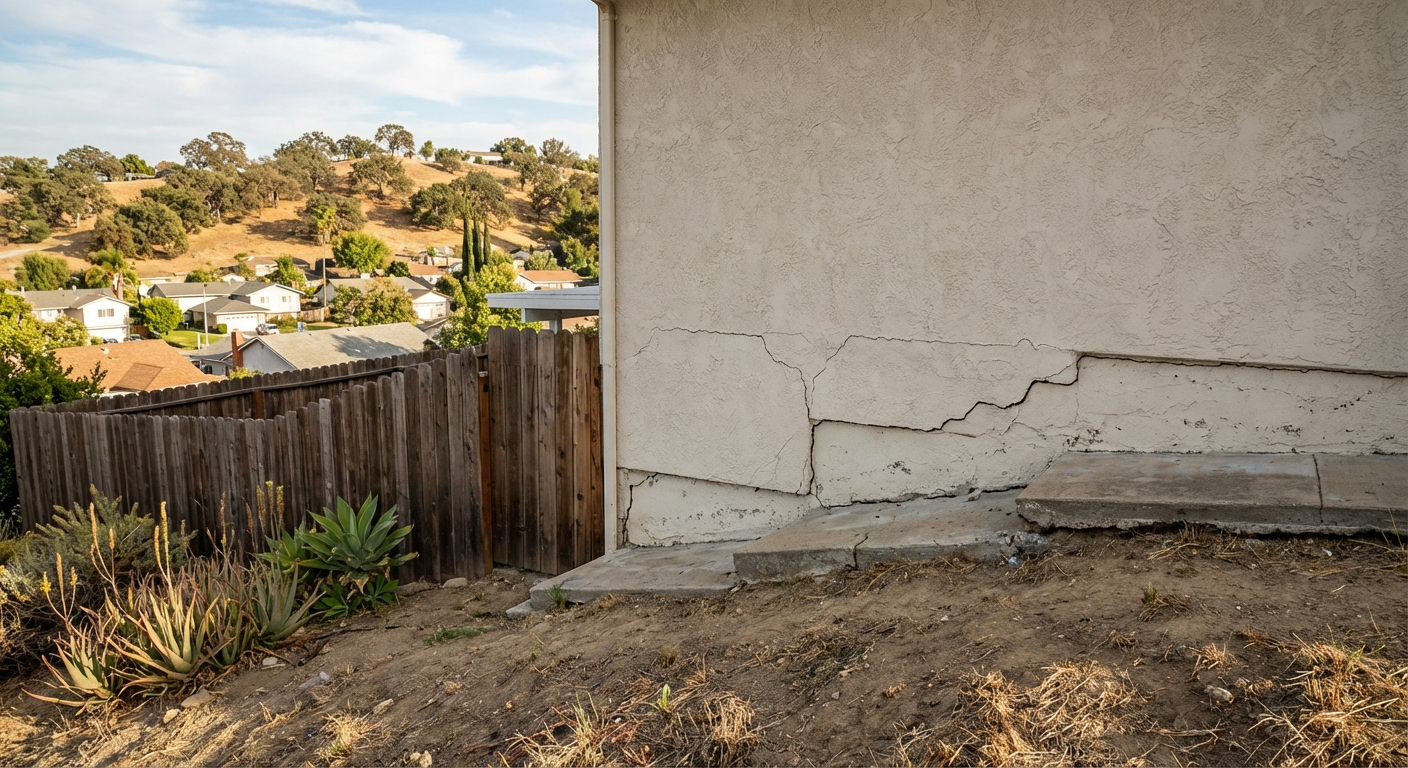
Imagine this: You’re walking through your living room, maybe in your cozy Craftsman in Pasadena or your ranch-style home out in Ventura County. You glance down and there it is – a thin, spiderweb crack stretching across the concrete slab. Or maybe a door starts to stick, just a little, then a lot. Suddenly, your stomach drops. Foundation damage. It’s one of those phrases that sends shivers down a California homeowner’s spine, right up there with “earthquake swarm” or “wildfire evacuation.”
For most of us, our home is our biggest asset, our sanctuary. And its foundation? That’s the literal bedrock of everything. So, when signs of trouble appear, the first question that pops into your head, after “How much is *this* going to cost?”, is usually, “Will my home insurance help?” The short answer is sometimes. The real answer is more complicated, especially here in the Golden State.
Why California Foundations Face Unique Challenges
You see, California isn’t just a pretty face with sunshine and beaches. Our geology is restless. We’re built on a patchwork of shifting tectonic plates, for one. That’s why earthquake coverage is its own separate beast, which we’ll get to. But it’s not just the big shakes. Many areas, from the Inland Empire to parts of the Valley, sit on expansive soils. These soils are like sponges; they swell when wet and shrink when dry. Think about the crazy rain we’ve had followed by long dry spells. That constant expansion and contraction can put incredible stress on a foundation over time.
Then there’s the age of our housing stock. Plenty of beautiful, historic homes across Los Angeles and the Bay Area were built decades ago, often before modern building codes and foundation techniques were standard. They’ve weathered a lot, but time takes its toll. And let’s not forget our love affair with lush landscaping. Tree roots, while pretty, can sometimes become foundation wreckers if they’re too close and seeking moisture.
Repairing foundation damage isn’t cheap, not by a long shot. We’re talking tens of thousands of dollars, sometimes well into six figures for serious structural issues. It’s a gut punch no homeowner wants to feel.

The Golden Rule of Insurance: Sudden and Accidental
When you think about what your standard HO-3 homeowner’s policy covers, a good rule of thumb is “sudden and accidental.” A fire? Covered. A burst pipe flooding your kitchen? Covered. A tree falling through your roof? Covered. These are unexpected, usually abrupt events.
But here’s where it gets interesting with foundations. Most home insurance policies are designed to protect against perils that cause direct, sudden damage. They’re generally *not* designed to cover maintenance issues, wear and tear, or problems that develop slowly over many years. This distinction is often the battleground when it comes to foundation claims.
For example, if you have a sudden, catastrophic plumbing leak *under* your slab – a pipe bursts, and water rapidly washes away supporting soil, causing a section of your foundation to crack or settle dramatically – that *could* be covered. The key here is the “sudden and accidental” nature of the leak and the *direct* damage it caused. But wait — if it’s a slow, persistent leak that’s been dripping for years, gradually eroding the soil and you didn’t know about it, that’s often a much tougher claim to get approved. Insurers may argue it falls under “gradual damage” or a lack of maintenance.
What Your Standard Policy Almost Certainly Won’t Cover
Let’s clear up some common misconceptions right away.
* **Earthquake Damage:** This is the big one in California. Your standard home insurance policy *does not* cover earthquake damage to your foundation or anything else. Period. If you want protection from the ground shaking your house apart, you need a separate earthquake policy, often purchased through the California Earthquake Authority (CEA) or a private insurer. These policies come with their own deductibles, which can be pretty high – often 10% to 25% of your dwelling coverage.
* **Flood Damage:** Similar to earthquakes, flood damage to your foundation – whether from a river overflowing or a storm surge – is not covered by a standard home policy. You need a separate flood insurance policy, usually through the National Flood Insurance Program (NFIP).
* **Gradual Settlement or Soil Movement:** This is where many homeowners run into trouble. If your foundation cracks or settles because the soil under your house has slowly expanded and contracted over years, or if your home is simply old and experiencing natural settling, that’s almost always excluded. Insurers view this as a natural process, not a sudden event. It’s like expecting your car insurance to cover the rust that gradually forms on your old car.
* **Poor Construction or Defects:** If your foundation problems stem from the way your home was built – say, the original contractor didn’t pour the slab correctly, or used substandard materials – your home insurance won’t cover that. That’s a defect, not an insurable peril.
* **Tree Roots:** As much as we love our California trees, if their roots slowly compromise your foundation by growing into it or drying out the surrounding soil, that’s typically considered a maintenance issue, and thus, not covered.
When Coverage Might Kick In: The Nitty-Gritty
Okay, so we’ve talked about what’s usually out. What about when it *might* be in?
* **Sudden Water Damage:** As mentioned, a pipe bursts or overflows *under* your slab, causing rapid erosion and immediate foundation damage. This is often covered because the initial event (the burst pipe) is a covered peril. However, the policy often differentiates between the cost to repair the pipe itself (which might be covered) and the cost to repair the foundation damage *caused by* the water (which might also be covered, but often has specific limitations or requires extensive proof of the direct cause-and-effect).
* **Vehicle Impact:** Imagine a rogue driver loses control and smashes into the side of your house, damaging the foundation. That’s sudden and accidental, usually covered.
* **Fire:** If a fire damages your home so severely that it compromises the foundation’s structural integrity, that would typically be covered as part of the overall fire claim.
* **Weight of Ice, Snow, or Sleet:** Less common in sunny Southern California, but if an extreme winter storm in, say, Big Bear, caused such immense weight on a structure that it directly damaged the foundation, it *could* be covered.
Understanding these distinctions can feel like trying to decipher ancient scrolls. That’s why having a trusted advisor, someone who speaks fluent insurance, is so important. Someone like Karl Susman of Los Angeles Homeowner Insurance, CA License #0B75129, has spent years helping California homeowners make sense of these complex policies. He’s seen the heartbreak of uncovered foundation damage and can help you understand your policy’s specific language *before* disaster strikes.
What Can a California Homeowner Do?
It’s easy to feel a bit helpless, isn’t it? But you’re not. There are steps you can take.
1. **Read Your Policy:** Yes, it’s boring. But that declarations page and the exclusions section are your roadmap. Pay close attention to language around “settlement,” “earth movement,” “water damage,” and “maintenance.”
2. **Regular Maintenance:** Be proactive. Keep an eye out for small cracks in exterior walls or your slab. Address drainage issues around your home. Make sure gutters direct water *away* from your foundation. Trim tree roots that are getting too close.
3. **Get Inspections:** If you suspect a problem, don’t wait. A structural engineer can assess the situation. Their report can be invaluable in understanding the *cause* of the damage, which is key for any potential insurance claim.
4. **Consider Earthquake Insurance:** If you live in California, this isn’t optional; it’s practically a necessity. While the deductibles are high, it’s better than facing total financial ruin after a major quake.
5. **Talk to an Expert:** This is probably the most powerful step. An independent insurance agent doesn’t work for one company; they work for *you*. They can shop around, explain different policy options, and clarify exactly what is and isn’t covered regarding foundation damage.
The California insurance market has been tough lately. Many parts of the state have seen premiums climb 20-30% in just the last couple of years, and some major insurers like State Farm and AAA have pulled back from writing new policies in certain areas. This makes finding the right coverage, with an agent who knows the California specifics, more critical than ever.
If you’re wondering what your current home insurance policy says about foundation damage, or if you’re looking for an earthquake policy, now’s the time to have that conversation. Don’t wait until you see that first crack.
Ready to understand your options better? Get a personalized quote for your California home insurance today. You can start by visiting https://losangeleshomeownerinsurance.com/quote/.
Frequently Asked Questions About Foundation Damage & Home Insurance
Q: Will my home insurance cover foundation damage caused by heavy rain?
A: It depends on how the rain caused the damage. If it led to a sudden, catastrophic event like a landslide (and you have specific earth movement coverage, which is rare and often separate) or a flood (requiring separate flood insurance), then no, a standard policy won’t cover it. If the rain caused gradual soil expansion and contraction over time, leading to settlement, that’s typically excluded as well. It’s a tricky area.
Q: What if I discover a hidden plumbing leak under my slab that’s been slowly damaging my foundation?
A: This is a common scenario and often a point of contention. If the leak was truly hidden and caused sudden, significant damage once discovered, some policies *might* cover the damage resulting from the leak, though not necessarily the cost to repair the pipe itself. However, if the insurer can prove it was a slow, gradual leak that you should have detected or falls under “wear and tear,” it’s often denied. This is exactly why detailed documentation and quick action are key.
Q: My foundation damage was caused by poor construction. Will my home insurance cover it?
A: No. Home insurance policies generally exclude damage caused by faulty design, poor workmanship, or defective materials. If your home is relatively new, you might have recourse against the builder or through a new home warranty, but not your standard home insurance.
Q: How can I tell if my home has foundation damage?
A: Look for tell-tale signs: cracks in exterior brick or stucco, cracks in interior drywall or plaster (especially above door frames or windows), doors or windows that stick or don’t close properly, uneven or sloping floors, gaps between walls and ceilings, or bowing walls. If you see any of these, it’s wise to get a professional inspection.
Q: Can I get specific insurance just for foundation damage?
A: No, not as a standalone policy. Foundation damage coverage is always tied to the perils listed in your overall home insurance policy, or excluded if it falls under common exclusions like earth movement or gradual settlement. Earthquake insurance is the closest you’ll get to specific “earth movement” coverage, but it’s for seismic events, not general soil issues.
Understanding the ins and outs of your home’s foundation protection can feel overwhelming. But it doesn’t have to be. Getting clear answers and exploring your options is the best way to safeguard your investment and your peace of mind.
To learn more about your California home insurance options, including earthquake coverage, and get a tailored quote, reach out to Karl Susman at Los Angeles Homeowner Insurance (CA License #0B75129) or visit us online: https://losangeleshomeownerinsurance.com/quote/. You can also call us directly at (877) 411-5200.
This article is for informational purposes only and does not constitute financial advice.