
When Your California Roof Takes a Hit: What Home Insurance Really Covers
For many California homeowners, the roof isn’t just a cover; it’s a constant worry. Maybe a fierce Santa Ana wind ripped off some shingles in Ventura County. Perhaps a sudden downpour exposed a leak you didn’t know you had. Or, worse, embers from a distant brush fire — like those that could threaten the hills around Los Angeles in a dry 2025 — landed and caused damage. When these things happen, the first thought is usually, “Will my home insurance pay for this?”
The short answer is yes. The real answer is more complicated.
Most standard homeowner policies in California do cover roof damage caused by sudden, accidental events. Think windstorms, hail, falling objects like trees, or even vandalism. That’s the good news. But here’s where it gets interesting. What your policy *doesn’t* cover, and how much it actually pays out, can be a world apart from what you expect.
The Difference Between “Covered” and “Not Covered”
Imagine a strong gust of wind tears off a section of your roof. That’s typically covered. A tree limb falls during a storm and punches a hole through your garage roof. Yes, that’s usually covered, too. These are clear examples of sudden, unexpected damage.
But what about a roof that’s just old? Shingles curling, granular loss, moss growing thick in the damp spots of the Valley. That’s wear and tear. That’s a maintenance issue. Insurers don’t cover neglect or the natural aging process of a roof. It’s like your car insurance not covering a blown engine if you never changed the oil. Makes sense, right?
Sometimes, the line blurs. What if an old, worn roof *then* suffers wind damage? An adjuster might argue that the pre-existing condition contributed significantly to the damage, reducing your payout or even denying the claim. This is a common friction point.

The Deductible and Depreciation Dance
Let’s say your roof *is* damaged by a covered event. You’ve got a claim. First, you’ll pay your deductible. If you have a $2,500 deductible, you’re on the hook for that amount before your insurer pays a dime. Many policies, especially in high-risk areas like parts of the Inland Empire, now have separate, higher deductibles for wind or hail damage – sometimes 1% or 2% of your home’s dwelling coverage. On a $700,000 home, that’s a $7,000 or $14,000 deductible. Big difference.
But wait — there’s another major factor: depreciation. Most California home insurance policies pay for roof damage on an Actual Cash Value (ACV) basis. This means the insurer pays the replacement cost *minus* depreciation for the age and condition of your roof.
Why ACV for Roofs is a Tough Pill to Swallow
Consider this: your asphalt shingle roof is 15 years old. The average lifespan for that type of roof might be 20-25 years. If a storm causes $20,000 in damage, your insurer will calculate the depreciation for those 15 years. They might decide your 15-year-old roof has depreciated by 60-70%. So, out of that $20,000, you might only get $6,000-$8,000, minus your deductible.
Suddenly, a $20,000 repair becomes a $12,000-$14,000 out-of-pocket expense, even after insurance. That’s a lot of money, especially in a state where roof replacement costs are already astronomical. A full roof replacement on an average California home can easily run $25,000 to $50,000, or even more for larger homes or specialty materials.
Some policies offer Replacement Cost Value (RCV) for roofs, which pays for a new roof without depreciation. But these policies are getting harder to find, especially for older roofs. Many insurers, like State Farm and AAA, have significantly tightened their underwriting guidelines on RCV roof coverage in recent years. If you have RCV, you’re lucky. If you don’t, you need to understand the financial reality.
Making a Claim: The Steps and Pitfalls
When your roof is damaged, act fast. First, ensure safety. If there’s a gaping hole, get a tarp on it to prevent further water damage. Document everything: take photos and videos from multiple angles, before and after temporary repairs. Keep receipts for tarps or emergency repairs.
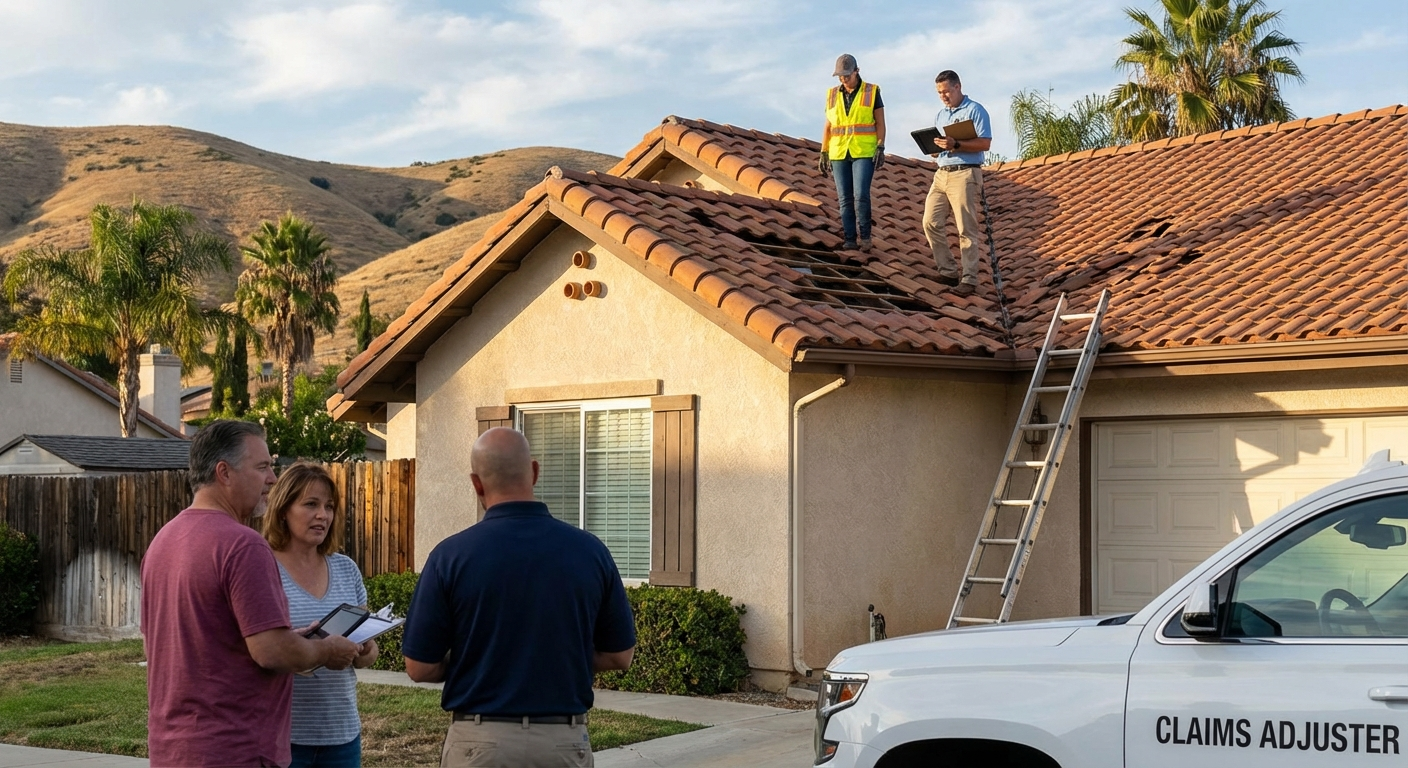
Then, contact your insurer. You’ll typically speak with a claims adjuster. They’ll want to inspect the damage. It’s a good idea to have your own contractor present during this inspection, if possible. You want an expert on your side, someone who understands local building codes and material costs.
The Hidden Costs and Delays
Here’s where things can get tricky. The insurer’s adjuster might have a different assessment of the damage or the repair cost than your contractor. They might say only a portion of the roof needs replacing, while your contractor insists on a full replacement due to matching issues or code requirements. You can’t just slap new shingles on one side of a roof if they don’t match the old ones; it looks terrible and can affect home value.
Which brings up something most people miss. Building codes change. If your roof needs a full replacement, your city might require new ventilation, upgraded underlayment, or even different materials to meet current standards. Your existing policy might not automatically cover these “code upgrades.” You often need specific endorsements for that.
And let’s not forget the current state of things. Supply chain issues, labor shortages, and high demand mean repairs can take longer and cost more. What an estimate was six months ago might be completely different now.
California’s Shifting Insurance Sands: Why Roof Claims Are Harder Now
It’s no secret that the insurance market in California is in turmoil. Insurers are pulling back, non-renewing policies, and raising rates significantly. Premiums jumped 40% between 2022 and 2024 for many homeowners. Companies like State Farm, Farmers, and AAA have all made headlines for restricting new policies or non-renewing existing ones.
Wildfires are a huge driver of this instability, even for homes not directly in the path of flames. The massive payouts from events like the 2018 Camp Fire or the more recent fires in the Sierra Nevada impact the entire state’s insurance risk pool. This means insurers are scrutinizing *all* aspects of a home, including the roof, much more closely.
The California FAIR Plan, meant to be an insurer of last resort, has also seen changes, offering more basic coverage, but often at higher prices and with stricter conditions. It’s not the robust safety net it once was for many.
The “Soft Spots” Insurers Look For
When an insurer reviews your policy for renewal, or when they’re considering offering you new coverage, they’re looking for reasons to say no, or to charge more. Your roof is a prime target.
They’ll look for “soft spots”:
* Visible moss or algae growth.
* Missing or broken shingles.
* Sagging sections.
* Poor flashing around chimneys or vents.
* Trees overhanging the roof, especially large oaks or eucalyptus.
* Any indication of deferred maintenance.
If your roof is older than 15-20 years, many insurers will outright refuse to offer coverage, or they’ll insist on an inspection and require repairs or replacement before they’ll bind a policy. It’s a tough market, and a well-maintained roof is your first line of defense, not just against the elements, but against insurance woes too.
Your Best Defense: Proactive Maintenance and Smart Policy Choices
Honestly, the best way to handle a roof damage claim is to try and avoid one. Regular inspections by a qualified roofing contractor can catch small issues before they become big, expensive problems. Keep records of all maintenance and repairs. Photos of your roof’s condition over time can be invaluable.
Beyond maintenance, you need to understand your policy. Don’t wait until a storm hits to read the fine print. Know your deductible. Understand if you have ACV or RCV for your roof. Ask about code upgrade coverage.
This is where an independent insurance agent becomes invaluable. Someone like Karl Susman of Los Angeles Homeowner Insurance, CA License #OB75129, has seen it all. He understands the nuances of the California market and can help you find the best coverage available for your specific situation. Don’t go it alone.
Ready to explore your options and ensure your roof is properly protected? Get a personalized quote today and talk to an expert who can help you make sense of it all. Get Your Home Insurance Quote Here.
Finding the Right Coverage in a Tough Market
It might feel like finding good home insurance in California is like searching for a unicorn, but it’s not impossible. It just takes persistence and the right guidance. An experienced agent can shop multiple carriers, explain the differences in coverage, and help you understand the real-world implications of your policy choices. They can also advise you on what improvements might make your home more attractive to insurers.
Don’t leave your roof’s protection to chance. Understand your policy, maintain your home, and work with an expert.
Take the first step towards securing your home’s future. Click here to get your custom home insurance quote. Or call Karl Susman directly at (877) 411-5200 for a personal consultation.
Frequently Asked Questions About California Roof Damage Claims
Does my home insurance cover a leaky roof?
It depends on what caused the leak. If it’s from sudden storm damage, like missing shingles after high winds, then yes, it’s usually covered. If the leak is due to old age, poor maintenance, or a slow deterioration over time, then no, it’s typically not covered.
What’s the difference between Actual Cash Value (ACV) and Replacement Cost Value (RCV) for roof claims?
ACV pays for the cost of a new roof minus depreciation for its age and condition. RCV pays for the cost of a new roof without deducting for depreciation. Most California policies default to ACV for roofs, meaning you’ll get less money for an older roof.
Will making a roof damage claim raise my premiums?
Possibly. While one claim might not drastically increase your rates, multiple claims can lead to higher premiums or even non-renewal. Insurers track claims history closely.
My insurer’s estimate for roof repair is lower than my contractor’s. What should I do?
This happens often. Get a detailed, written estimate from your contractor, explaining why their costs are higher (e.g., specific materials, code upgrades, labor rates). Share this with your insurer and be prepared to negotiate. An independent agent can sometimes help mediate these discussions.
How old can my roof be and still get coverage in California?
Many insurers are hesitant to cover roofs older than 15-20 years, especially asphalt shingles. Some might require a professional inspection and proof of good condition or even a full replacement before offering coverage. It varies by insurer and policy.
This article is for informational purposes only and does not constitute financial advice.