
That Little Building Out Back? Don’t Forget It.
You’ve finally got that perfect California home. Maybe it’s a craftsman bungalow in Pasadena, a sprawling ranch in the Inland Empire, or a coastal retreat up near Ventura. You’ve thought about the main house, sure. You’ve probably spent hours agonizing over the right coverage for its walls, its roof, your furniture inside. But what about everything else on your property? The garage that isn’t attached, the shed holding all your gardening gear, that beautiful new pergola creating shade over your patio?
For most California homeowners, these structures often get overlooked when they think about insurance. They’re called “other structures” in the insurance world, and they play a surprisingly big role in how well you’re protected if something goes wrong. Honestly, it’s one of those details that seems minor until a wildfire sweeps through, or a strong Santa Ana wind topples your fence. Then, suddenly, it’s not so minor after all.
What Exactly Counts as “Other Structures”?
Let’s get clear on what we’re talking about. Generally, an “other structure” is anything on your property that isn’t directly connected to your main dwelling. It needs to be separated by a clear space, like a breezeway or a simple gap.
Think about it:
* Detached garages: Super common, especially in older neighborhoods.
* Sheds: For tools, bikes, holiday decorations – you name it.
* Fences: Those long stretches defining your property line.
* Pergolas or gazebos: Adding beauty and function to your yard.
* Carports: Providing shelter for your vehicles.
* Pool houses: Often a whole little building in itself.
* Guest houses or ADUs (Accessory Dwelling Units): This is a big one for California homeowners right now.
Now, if you have a deck or patio that’s *attached* to your house, that typically falls under your dwelling coverage. Big difference. The key is that separation.

Why “Other Structures” Coverage Is a Big Deal in California
California’s unique challenges make this coverage particularly important. We’re not just talking about a leaky roof here.
Consider the wildfires. Every fire season, we see homes, and everything around them, sadly lost. Imagine a fire ripping through your property in, say, the hills of Sonoma County. It might spare your main house thanks to defensible space, but incinerate your detached workshop and 100 feet of wood fencing. Without proper coverage for those “other structures,” you’re on the hook for rebuilding costs.
Or think about the wind. Those powerful gusts that blast through the canyons of Malibu or whip across the desert landscapes of Palm Springs? They don’t just rattle windows. They can take down fences, rip apart sheds, or even damage the roof of your detached garage.
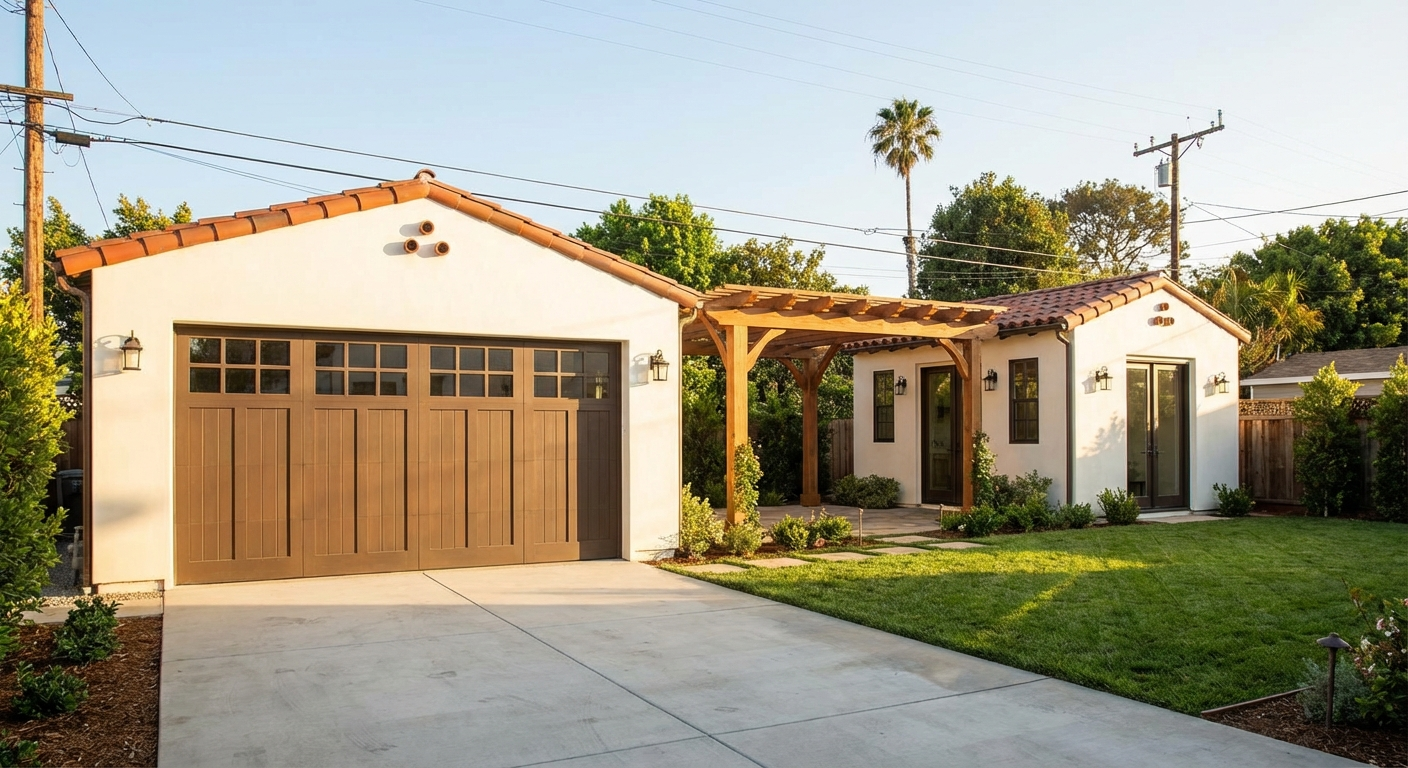
Then there’s the whole ADU boom. Many Californians are building these smaller units – sometimes called casitas or granny flats – for family or to rent out. An ADU isn’t just a shed; it’s often a fully functional living space. Relying on standard “other structures” coverage for something that could cost $200,000 or more to rebuild? That’s a huge gamble.
How Much Coverage Do You Really Get? (And Is It Enough?)
Here’s where it gets interesting. Standard homeowner insurance policies – often called an HO3 policy – typically include coverage for other structures as a percentage of your main dwelling coverage. Usually, it’s around 10%.
So, if your main home is insured for, say, $500,000, your other structures might automatically be covered for $50,000. Sounds like a decent chunk of change, right?
But wait — is $50,000 enough for *all* your detached structures? Maybe if you just have a small shed and a couple of fences. But what if you have:
* A detached two-car garage that would cost $70,000 to rebuild?
* A custom-built gazebo that cost $15,000?
* 150 feet of high-end fencing at $50 a foot? That’s $7,500 right there.
* Oh, and that ADU you just finished for $250,000?
Suddenly, that $50,000 looks pretty meager. The short answer is yes, 10% is standard. The real answer is more complicated: it’s often not enough for many California homeowners, especially with today’s construction costs. Materials and labor have jumped significantly. What cost $20,000 to rebuild a few years ago might cost $35,000 or $40,000 now.
The ADU Conundrum: When “Other Structures” Needs a Boost
The rise of ADUs really highlights this coverage gap. California has made it easier to build these units, and they’re popping up everywhere from San Diego to Sacramento. They’re fantastic for extra income or housing family members.
But here’s the thing: most standard homeowner policies weren’t designed with a fully equipped second dwelling in mind when they set that 10% rule. If your ADU burns down in a fire, or is severely damaged in a windstorm, you’ll quickly find that your other structures limit barely scratches the surface of rebuilding costs.
Many insurers will require you to increase your “other structures” coverage specifically to account for an ADU. Some might even want to write a separate policy or add a special endorsement, especially if you’re renting it out. Why? Because renting it out changes the risk profile. It’s no longer just your stuff; it’s a tenant’s living space. You’ll want to discuss liability, too. It’s a whole different ballgame.
Fences, Landscaping, and the FAIR Plan
Don’t underestimate fences. They’re often the first things to go in a wildfire, acting as a kind of fuse to a property. And replacing them, especially long stretches, can be shockingly expensive. Many people forget to factor their fences into their “other structures” valuation.
What about landscaping? Technically, trees and shrubs usually aren’t covered under “other structures.” They often have their own, much smaller, specific coverage limits in your policy, like $500 or $1,000 per tree, up to a total percentage.
Which brings up something most people miss: The California FAIR Plan. If you’re in a high wildfire risk area – and let’s face it, many parts of California are – you might find yourself with a FAIR Plan policy for fire coverage. FAIR Plan policies are designed as a last resort. They typically offer *very* limited coverage for other structures, often much less than a standard HO3 policy from a private insurer. You might need to buy an additional “Difference in Conditions” (DIC) policy to fill in gaps, including for other structures. It’s a patchwork approach, but it’s often the only option in some truly fire-prone zones like parts of the Sierra Nevada foothills or extreme rural areas of San Bernardino County.
How to Get Your “Other Structures” Coverage Right
Honestly, this isn’t a “set it and forget it” kind of thing. You really need to take stock of what you have on your property.
1. Make a list: Walk around your property. What detached structures do you have? Sheds, garages, fences (estimate linear feet), pergolas, pool equipment enclosures, ADUs.
2. Estimate replacement costs: This is the tricky part. Get local quotes if you’re unsure. What would it cost to rebuild that garage today? Not what you paid for it 20 years ago.
3. Talk to an expert: This is where an experienced independent agent like Karl Susman at Los Angeles Homeowner Insurance comes in. We’ve seen it all, from detached workshops full of expensive tools to elaborate outdoor kitchens. We know the California market, what insurers are looking for, and where the pitfalls lie. His CA License #OB75129 means he’s authorized to help you sort this out.
You might need to specifically request higher limits for your other structures. It’s an endorsement you can add to your policy. And while it will increase your premium, it’s often a small price to pay for genuine peace of mind, especially when you consider the cost of rebuilding out-of-pocket. Don’t wait until a major weather event or a fire makes you wish you’d looked into it sooner.
Protecting your entire property means thinking beyond just the four walls of your main house. Every structure, big or small, represents an investment and a potential loss if not properly insured.
Ready to see if your other structures are truly covered? Let’s get you a quote that makes sense for your unique California property. Visit https://losangeleshomeownerinsurance.com/quote/ to start the conversation.
We want you to feel confident that your entire property is protected, from your living room to your backyard shed and everything in between. Karl Susman and the team at Los Angeles Homeowner Insurance are here to help you understand your options and tailor a policy that fits.
Thinking about what your policy actually covers can feel like a chore. We get it. But knowing your detached garage in Orange County or your fence line in the Valley is adequately protected? That’s priceless.
Want to explore your specific needs and ensure all your structures are properly covered? Head over to https://losangeleshomeownerinsurance.com/quote/ for a personalized quote.
Frequently Asked Questions About Other Structures Coverage
Does my detached garage count as an “other structure” or part of my main dwelling?
If it’s truly detached and not physically connected to your main house by a roof, wall, or foundation, it’s considered an “other structure.” This is a common point of confusion, but the physical separation is key.
What if I use my detached garage or ADU for a home business or rental?
This changes things significantly! If you’re running a business out of it or renting it to tenants, your standard “other structures” coverage might not be enough, or it might not even apply for certain perils. You’ll likely need special endorsements, increased liability coverage, or potentially even a separate policy to ensure you’re fully protected. Always tell your agent about these uses.
Are fences covered if they’re damaged by a neighbor’s tree falling?
Generally, yes, if the damage is caused by a covered peril like a falling tree. However, whose insurance pays might depend on where the tree originated and who was responsible for its maintenance. Your “other structures” coverage would typically respond to your portion of the fence that’s damaged, up to your policy limits.
Does “other structures” coverage protect against earthquakes or floods in California?
No, usually not. Standard homeowner policies (HO3) typically exclude damage from earthquakes and floods. If you want coverage for these perils for your main home or your other structures, you’ll need to purchase separate earthquake insurance or flood insurance policies.
How much does it cost to increase my “other structures” coverage?
The cost varies widely based on your location, the amount of coverage you’re adding, and your overall policy. It’s usually not as expensive as increasing your main dwelling coverage, but it’s a worthwhile investment. An agent can give you specific figures based on your needs.
This article is for informational purposes only and does not constitute financial advice.